

R&D Tax Reliefs: what they are and what they’re worth
R&D Tax Reliefs help support investment in innovation by offering Corporation Tax relief on qualifying R&D expenditure. Businesses can benefit from significant tax savings or even a payable cash credit.
R&D schemes and typical benefits include:
Depending on your profitability, relief typically ranges from around 15% up to 26.7% of qualifying spend.
Depending on your circumstances, relief can be used to reduce your Corporation Tax bill, generate a repayment of tax already paid, or be converted into a cash credit where losses arise.

Who can claim R&D Tax Relief?
Your company may be eligible if it is a UK limited company carrying out projects aimed at developing new or improved products, processes, or services.
To qualify, the work needs to go beyond routine application of existing knowledge; HMRC looks for a genuine advance in science or technology, achieved by solving a technical problem that stumped your team, not just following a manual or applying standard industry practice.
We support successful claims across a wide range of industries, including:
- Software and IT
- Life sciences and pharmaceuticals
- Manufacturing and engineering
- Construction and agriculture

What counts as qualifying R&D?
R&D activity can take many forms; this can include developing new products, refining existing processes, or building and improving software systems.
What costs can be included?
Eligible expenditure falls into two broad categories:
People costs
- Staff costs, including salaries, employer’s NIC and pension contributions
- Externally provided workers (EPWs)
- Subcontractor costs
Other qualifying costs
- Software licences
- Cloud computing and data usage
- Materials consumed in the R&D process
- Utilities directly used in R&D activities

Our Process for R&D Claims
What we need from you
Time with your technical team to walk us through the development work undertaken across your business. This is how we identify which activities may qualify against HMRC’s current guidance and eligibility criteria.
What we handle
- Building a robust and compliant claim, including a detailed technical narrative and an accurate cost breakdown
- Preparing all required compliance documentation, including HMRC’s Claim Notification where applicable
- Advising on how best to utilise the Corporation Tax benefit for your business
- Submitting your claim to HMRC, including incorporation into your Company Tax Return (CT600) and the Additional Information form
What you get
A fully prepared, HMRC-compliant claim submitted on your behalf, maximising the value of your relief with minimal input required from your team beyond the initial scoping conversation.
R&D Tax Reliefs FAQs
We already have an accountant — why should we work with an R&D Tax Reliefs specialist?
Your accountant plays a key role in supporting your business, but identifying R&D Tax saving opportunities requires a different type of review.
R&D Tax Reliefs claims involve understanding the technical challenges behind your projects, the development process followed and the costs associated with the qualifying activities.
Working alongside your accountant allows you to benefit from both their knowledge of your business and specialist R&D Tax expertise when preparing your claim.
We don’t think our business carries out R&D, could we still qualify?
Many businesses overlook potential R&D opportunities because they associate research and development with laboratories, scientists or large technology companies. In reality, innovation could happen through more everyday problem-solving, such as improving processes, developing more efficient systems, creating new products or overcoming technical challenges.
If your technical team has had to find a solution where the outcome was not immediately obvious, it may be worth exploring whether your activities qualify.
How do I know if my business has carried out qualifying activities that may qualify for R&D Tax Reliefs?
A good starting point is to consider whether your business has attempted to overcome a technical challenge or achieve an improvement that required investigation, testing or development.
Examples may include:
- Developing a new product or service
- Improving the performance of an existing product
- Creating bespoke software or systems
- Finding solutions to technical limitations
- Developing more efficient production methods
Is R&D only relevant for technology companies?
No. R&D takes place across many industries. Businesses in manufacturing, engineering, construction, food production, software and other sectors may all carry out qualifying activities.
Why do businesses miss out on R&D Incentives?
Common reasons include:
- Believing R&D projects must ultimately be successful to qualify
- Not recognising improvements to existing products or processes as innovation
- Not understanding which costs may be eligible
- Lack of time or access to expert support
A specialist review can often identify opportunities that businesses have previously overlooked.
Can R&D Incentives benefit established businesses as well as start-ups?
Yes. R&D support is available to businesses of all sizes. In fact, many established companies regularly invest in improving their products, processes and systems without realising those activities may qualify.
How do you make sure an R&D claim is compliant with HMRC requirements?
A successful R&D claim is not just about identifying expenditure, it is about clearly demonstrating the technical work undertaken.
We focus on building evidence around:
- The advance being sought
- The uncertainties encountered
- The work carried out to resolve those uncertainties
- The costs directly connected to the qualifying activities
This ensures claims are prepared with all the supporting detail HMRC expects.
Take a look at our R&D Incentives case studies...
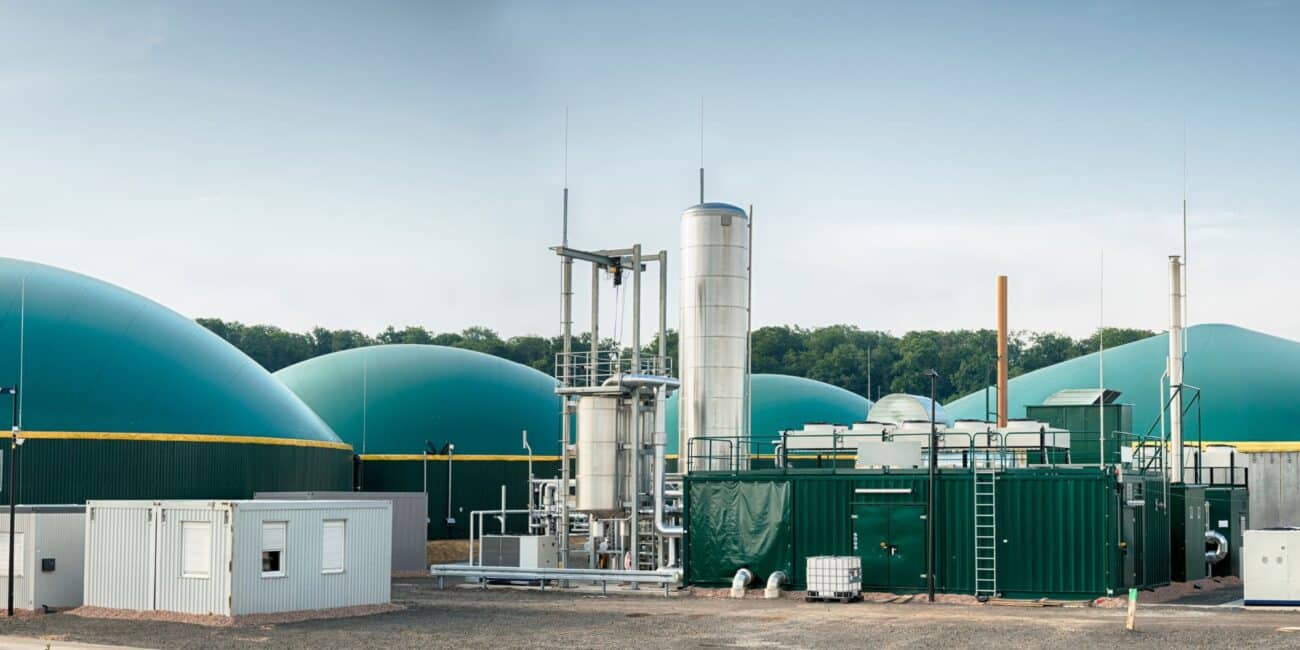

Biotechnology
Industry: R&D Incentives
- £2,368,372

- £3,737,519
- £1,230,821
Have you explored whether your development work qualifies?
If your business has invested in creating something new, improving how you operate, or overcoming technical challenges, you may be eligible for R&D Tax Relief.
Our specialists can help you understand your position and guide you through the claims process.
Start a conversation with our R&D Incentives specialists.