

Key Changes to Capital Allowances from Previous Budgets
Since the Spring Budget 2025, there have been several developments that impact capital allowances and business investment. The government has maintained the Annual Investment Allowance (AIA) at £1 million, ensuring SMEs continue to benefit from immediate tax relief on qualifying expenditure.
Full Expensing, introduced in 2023 and made permanent last year, remains in place, allowing businesses to deduct 100% of qualifying main pool assets in the first year.
These measures build on previous budgets’ focus on stimulating investment and providing certainty for businesses planning capital expenditure, giving companies a clear framework to maximise relief opportunities.
Autumn Budget 2025 Changes to Capital Allowances
Key highlights in the Autumn Budget 2025 include:
New 40% First-Year Allowance (FYA)
- Due to start on 1 January 2026.
- This applies to main rate capital expenditure.
- It will be available to all businesses, which is different from Full Expensing that applies to just companies.
- It will include assets purchased for leasing, which were previously excluded from other reliefs.
Reduction in Writing-Down Allowances
- The rate will be reduced from 18% to 14%, starting on the 1 April 2026 for corporation tax, and 6 April 2026 for income tax.
- A hybrid rate will be applied to businesses that have accounting periods spanning those transition dates.
- This will reduce the long-term tax relief available on capital expenditure that doesn’t qualify for first year allowances.
What does our Managing Director think of the Autumn Budget changes?
“It is encouraging to see the government’s continued commitment to Full Expensing, which has already delivered significant benefits to the businesses we support.
The introduction of a new 40% first‑year allowance for leased asset acquisitions is also a welcome measure.
However, the reduction in the main pool writing‑down rate is disappointing. This change will inevitably increase tax liabilities, limiting the extent to which businesses can mitigate costs.
While the 40% first‑year allowance appears positive on paper, in practice, it is unlikely to be widely utilised given the availability of more accessible reliefs such as the Annual Investment Allowance (AIA).
Overall, this Budget highlights the importance of businesses conducting comprehensive reviews of annual expenditure to ensure that all available first‑year allowances are fully maximised.”
– Chris Roberts, Managing Director

Capital Allowances Explained
Capital allowances are a form of tax relief allowing businesses to deduct the cost of certain capital expenditures from taxable profits. Essentially, they reduce a company’s Corporation Tax liability, improving cash flow and freeing up funds for further investment.
Capital allowances apply to a wide range of qualifying assets, including:
- Plant and machinery: Equipment, vehicles, office systems, or manufacturing tools.
- Integral features of buildings: Lighting, air conditioning, lifts, and other fixtures necessary for the building to function.
- Fixtures and fittings: Within commercial property, such as partitions, floor coverings, and certain mechanical systems.
- Energy-saving and environmentally friendly assets: Investments in sustainable technology may qualify for enhanced relief.
Claiming capital allowances effectively reduces the cost of investment, making it a powerful financial tool for businesses of all sizes.
Key Capital Allowances
Several existing capital allowance options continue to support business investment:
- Annual Investment Allowance (AIA):
Provides 100% first-year relief on qualifying expenditure up to £1 million, allowing businesses to immediately deduct costs from taxable profits. AIA is particularly valuable for SMEs making significant investments in equipment or property. - Full Expensing:
Introduced in 2023 and made permanent in 2024, Full Expensing allows companies to claim 100% first-year relief on qualifying main pool expenditure. This encourages businesses to invest in assets without waiting for depreciation over several years. - Special Rate Pool:
Expenditure on long-life assets or integral building features continues to attract special rate relief, generally at a lower percentage but still providing tax advantages over time.
Why Capital Allowances Matter for Businesses
Capital allowances are more than a tax-saving tool; they directly influence business decision-making:
- Cash flow management: By reducing tax liability, businesses retain more funds for operational or expansion purposes.
- Investment planning: Knowing that expenditure qualifies for relief helps companies plan large purchases or property refurbishments with confidence.
- Sustainability incentives: Capital allowances for energy-efficient assets encourage environmentally responsible investment.
- Property acquisitions: When purchasing commercial property, identifying embedded capital allowances can unlock substantial tax relief.
For example, a manufacturing company investing £500,000 in new machinery could deduct the full cost under Full Expensing, reducing taxable profits and freeing cash for further investment. Similarly, an office refurbishment with energy-efficient lighting and HVAC systems could qualify for Full Expensing, improving the financial return on investment.

Practical Steps for Businesses Post-Budget
Following the Autumn Budget 2025, businesses should take a proactive approach to capital allowance planning:
- Review Current and Planned Investments:
Examine all upcoming capital expenditure to ensure qualifying assets are identified and captured. - Engage a Specialist Early:
Work with qualified advisors to ensure all eligible allowances are claimed, including embedded capital allowances in property acquisitions. - Document Purchases Carefully:
Accurate records of acquisition and installation dates, costs, and asset details are essential for maximising relief. - Plan Strategic Timing of Expenditure:
Aligning capital spending with relief opportunities (e.g., AIA thresholds or Full Expensing provisions) can improve tax efficiency and cash flow management.
By following these steps, businesses can translate Budget announcements into practical financial advantage.
Frequently Asked Questions
Have any changes been made to capital allowances in the Autumn Budget 2025?
Yes! A new 40% first year allowances will be introduced on 1 January 2026 for main rate expenditure and writing down allowances are being reduced from 18% to 14% from 1 April 2026 (corporation tax) and 6 April 2026 (income tax).
Which types of expenditure qualify for capital allowances?
Qualifying expenditure includes plant, machinery, integral building features, fixtures, fittings, and energy-efficient equipment.
How can businesses maximise capital allowance claims?
Review all qualifying expenditure, identify embedded allowances in property or refurbishment projects, and seek professional guidance to ensure nothing is missed.
What is the benefit of Full Expensing versus standard allowances?
Full Expensing allows 100% first-year relief on qualifying main pool expenditure, offering immediate tax relief and improved cash flow, rather than spreading the deduction over several years.
Can second-hand assets qualify for capital allowances?
Yes. Both new and second-hand assets can qualify for capital allowances, including plant and machinery, provided they are used in your business. However, assets previously owned by the same business or transferred without cost may not qualify. It’s important to check the specific rules for AIA and Full Expensing, as these can differ depending on the asset type.
Frequently Asked Questions
Are refurbishment costs on commercial property always eligible?
Not all refurbishment costs automatically qualify. Only specific capital expenditure, such as integral features (lighting, air conditioning, lifts) or certain fixtures, is eligible. Routine repairs or maintenance are treated as revenue costs and do not qualify. Reviewing historical and current property projects can uncover embedded allowances that might otherwise be overlooked.
How do embedded capital allowances work?
When purchasing a commercial property, some fixtures and integral features may qualify for capital allowances even if they were installed by a previous owner. These are called embedded allowances. Identifying them requires careful assessment and can significantly reduce your tax liability. Many businesses miss these opportunities without professional guidance.
Can energy-efficient investments still be claimed?
Yes. While enhanced capital allowances for green investments no longer exist, energy-efficient assets may still qualify for standard capital allowances or Full Expensing. Planning your investment carefully ensures you maximise the relief available while supporting sustainability goals.
Does the timing of expenditure affect relief?
Absolutely. For example, spending within the current AIA limit or planning purchases to align with Full Expensing rules can maximise first-year tax relief. Businesses should schedule capital expenditure strategically and keep detailed records to ensure claims are fully supported.
Is professional guidance necessary?
While businesses can claim allowances independently, professional advice ensures all qualifying expenditure is identified and claims are maximised. This is especially important for property acquisitions, refurbishments, or large machinery purchases where overlooked allowances could mean substantial tax savings.
Expert Help
Capital Allowance Review Service helps businesses secure every available relief, from embedded allowances in commercial property to plant and machinery investments. Our process often begins with a comprehensive site survey, where we assess your property and assets to identify all qualifying expenditures. This ensures that no capital allowances are overlooked, maximising the potential tax relief available.
The Autumn Budget 2025 reinforces that capital allowances are a vital tool for business growth, cash flow management, and long-term strategic planning. Businesses that act now, with expert guidance and a thorough review of their assets, can claim every available allowance and position themselves for sustainable success in 2026 and beyond.
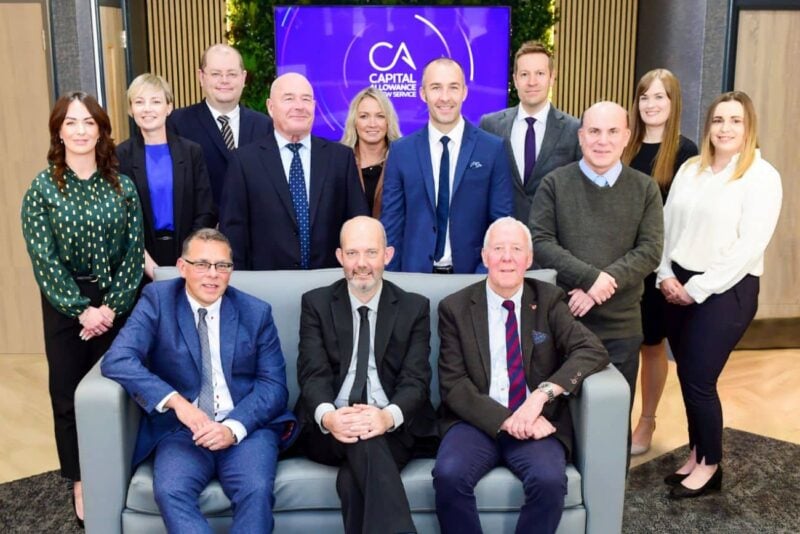
Get in touch with our experts today to see how much your business could save through capital allowances...
Latest News

 25 September 2026
Unclaimed Capital Allowances in the UK: How to Recover the Tax Relief Hiding in Your Property
Unclaimed capital allowances UK-wide are far more common than most business owners realise. HMRC’s own research into capital allowances, found that businesses had limited awareness or understanding of capital allowances. This no doubt resulting in missed tax savings as they aren’t aware the... 24 September 2026
Capital Allowances for Accountants and Their Clients: How to Add Real Value Without Becoming the Specialist
“Like many other general practitioners, we thought that we knew all the important stuff about capital allowances…after the team had finished with us, we realised there was a whole lot more to be claimed than we first thought!” Chris Booth | Partner – McKellens Chartered Accountants Capital...
Contact Us
Our expert team are here to help answer any of your capital allowances questions or enquires you have about your commercial property.